Overview
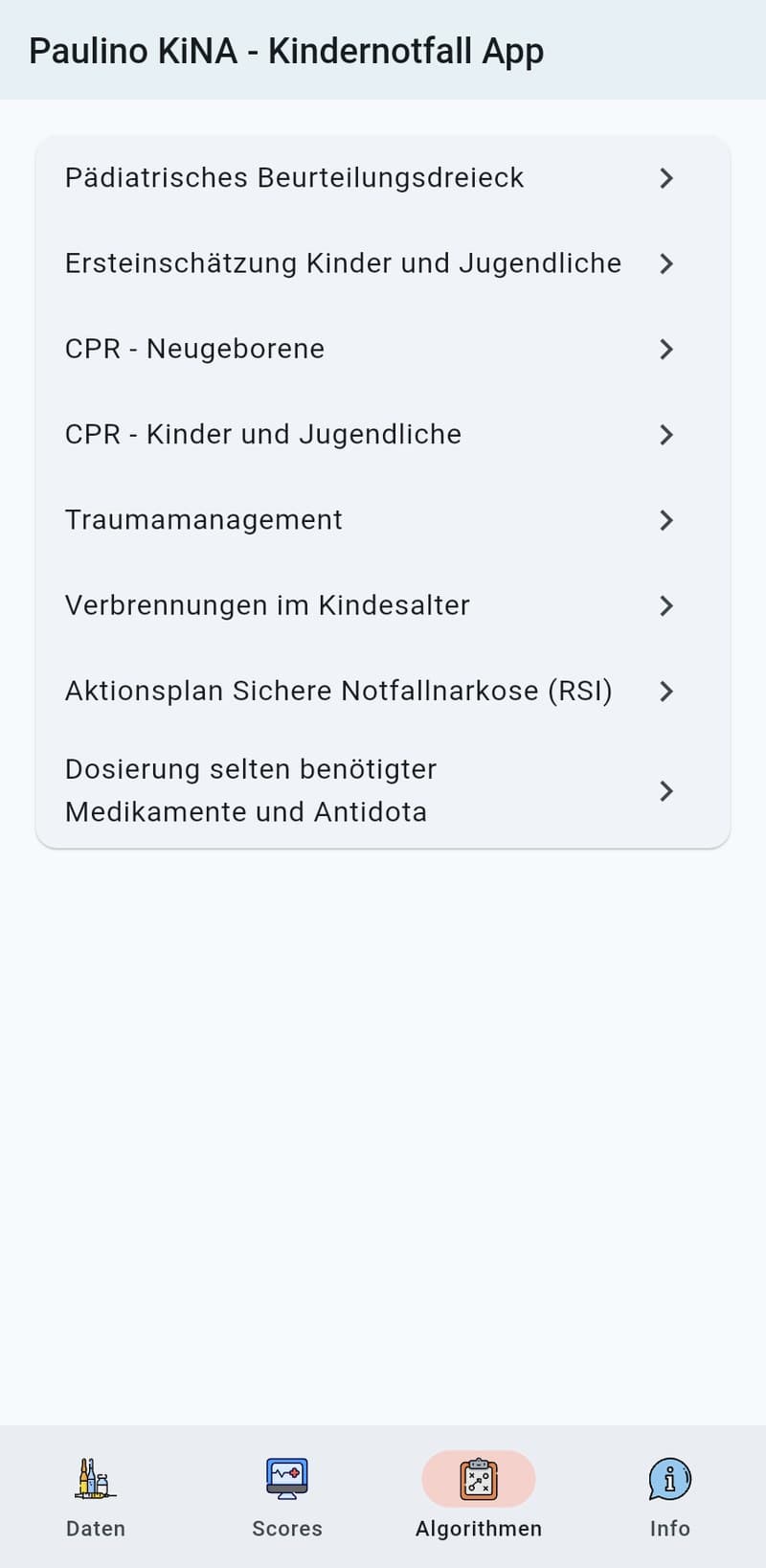
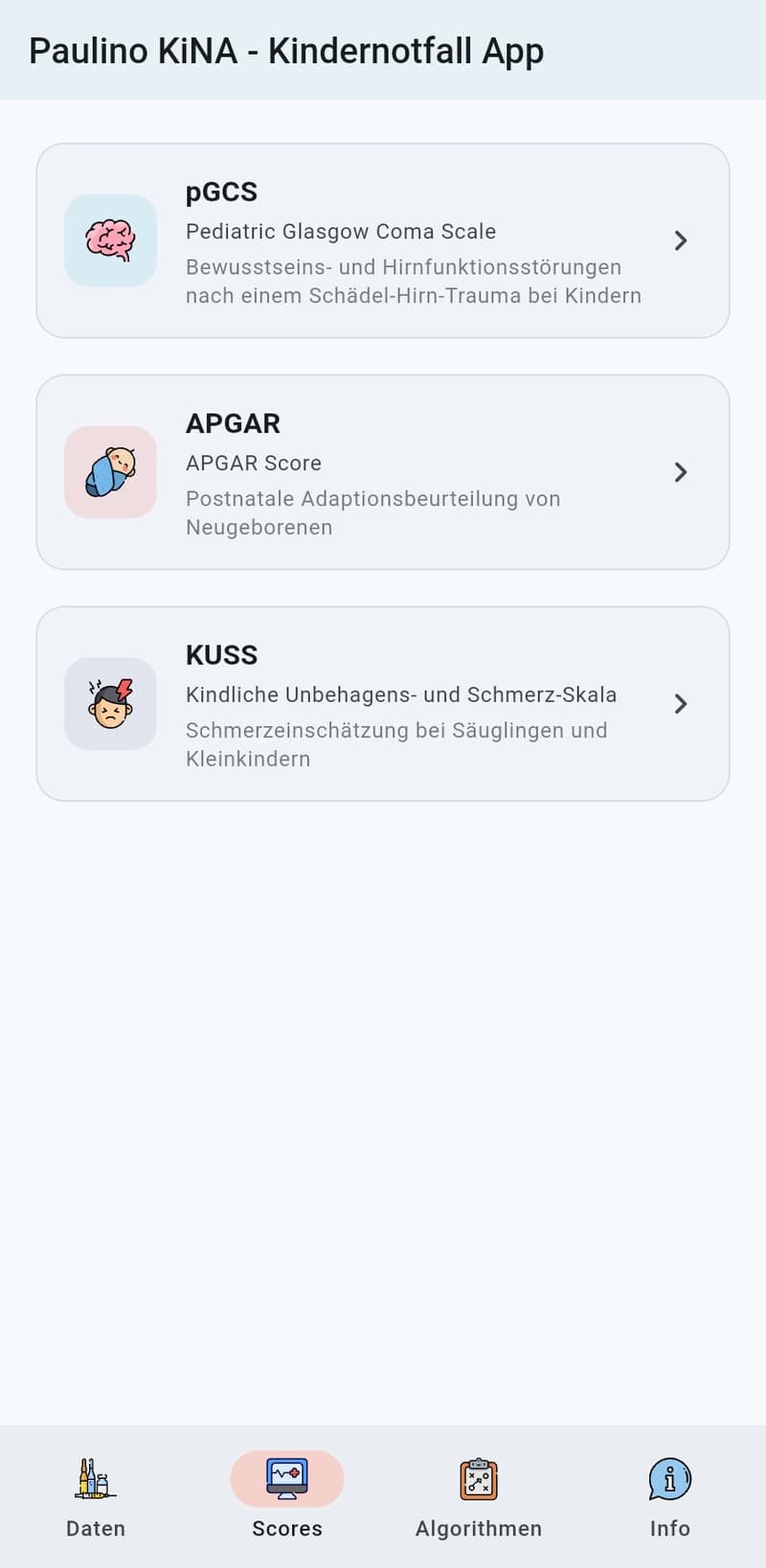
Paediatric emergencies are rare, so most ambulance crews see only a few. They are also dangerous, and the dose calculation has to be right the first time. Doses are given per kilogram, the weight is an estimate, the drug often needs diluting, and all of it happens in the back of a moving vehicle. KiNA asks for one input, the size of the child, and works out the rest: normal ranges for vital signs, airway equipment sizes, and every dose in milligrams. The app is built with the Paulino System and the Rettungsdienst FactSheets. It's free on purpose, because nobody should have to pay before they can look up a dose for a child.
Every number has a source
The arithmetic is simple. The hard part is building something a clinician will trust at three in the morning. Each figure in KiNA has a fixed, documented source: weight estimation by length from the Paulino System, a class 1 medical device; the DIVI paediatric emergency card that crews already carry; dosing recommendations from the children's hospital Auf der Bult; and the S2k guideline on medication safety in paediatric emergencies. Where these sources disagree, the app doesn't average them. It follows the source it names.
One input, visible working
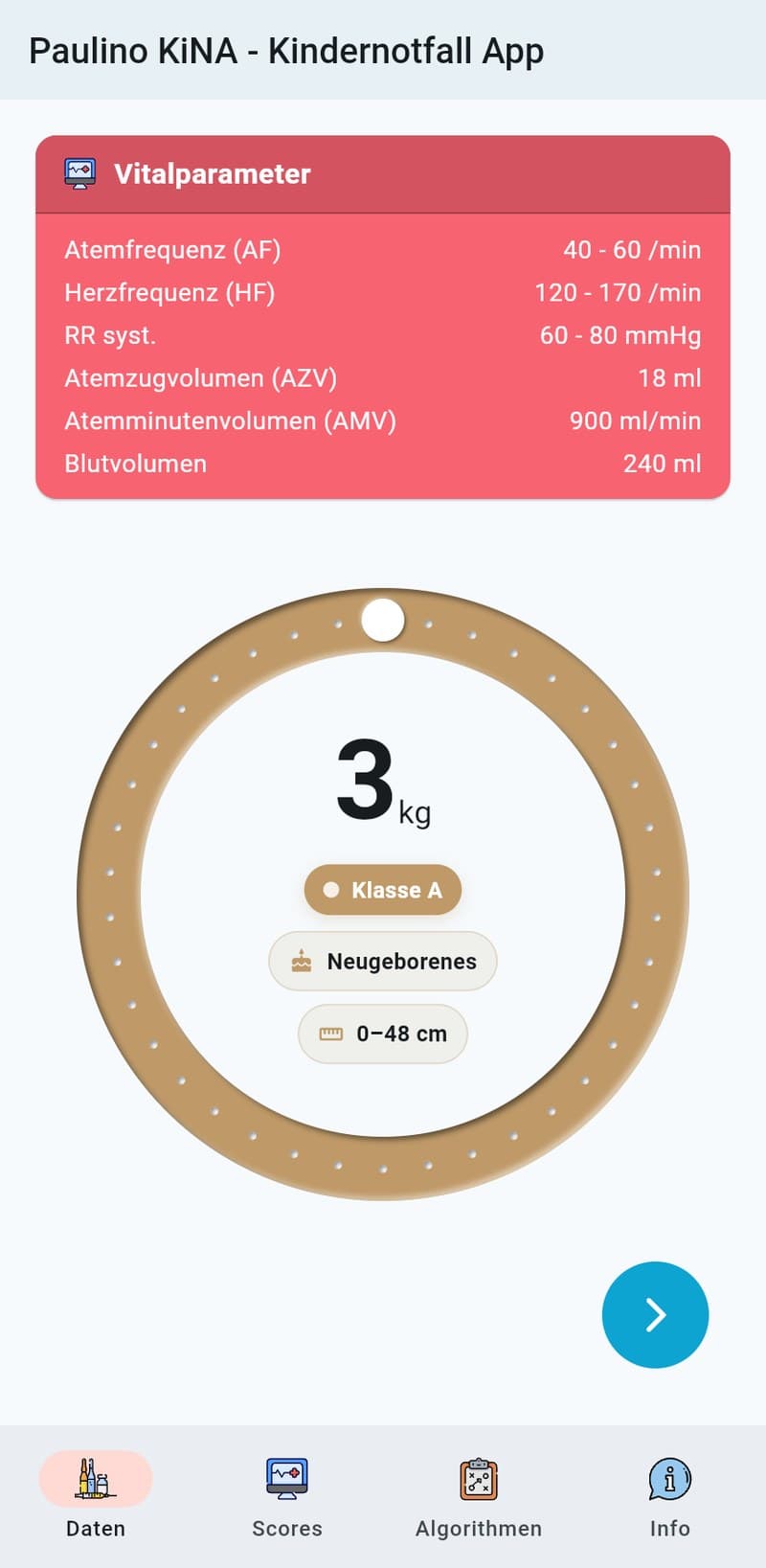
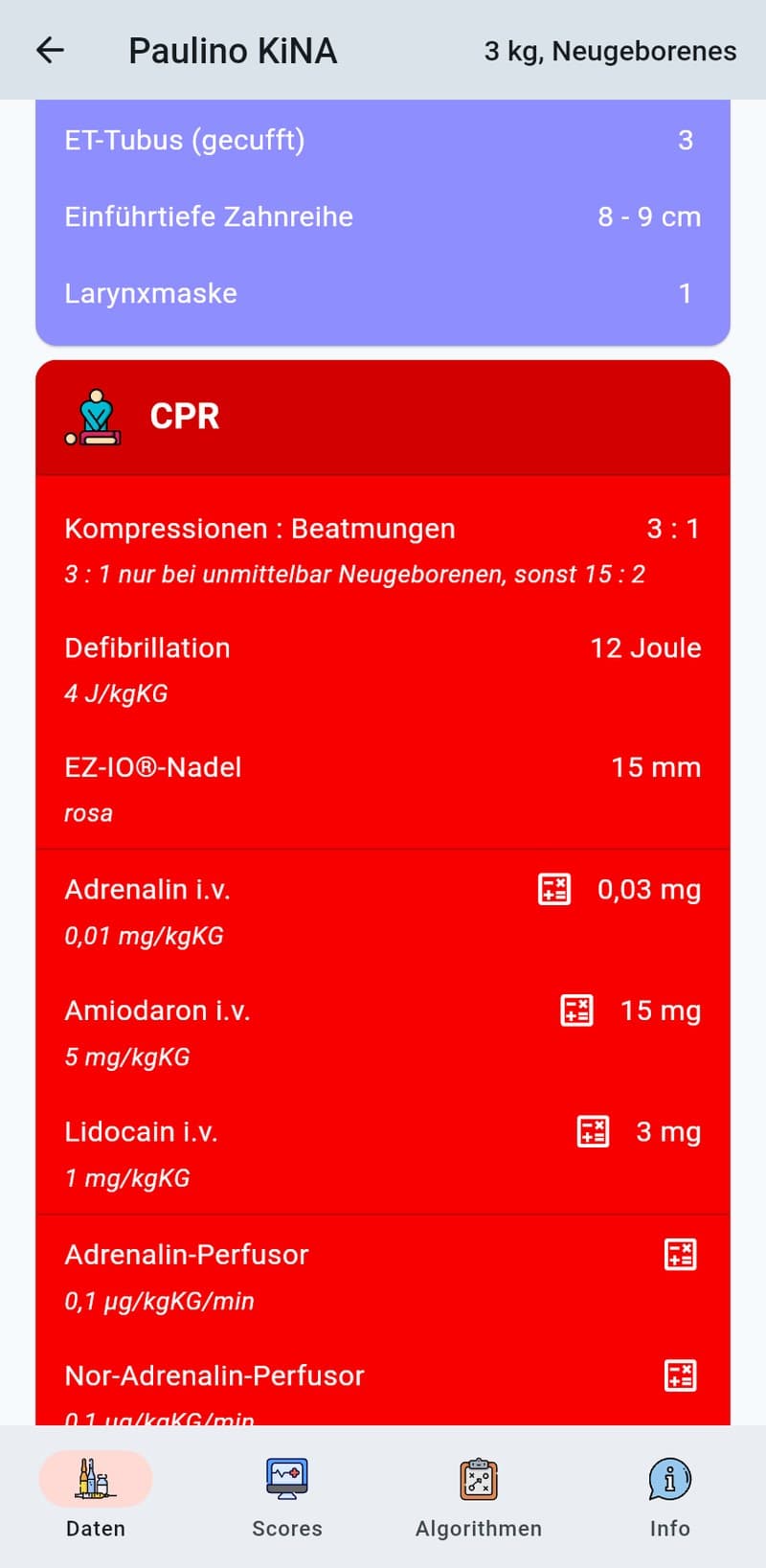
Everything depends on a single dial. You set it to the child's weight, or to the length band shown on the Paulino tape, and the weight class, age group and length range follow. Every card below then applies to that child: breathing and heart rate ranges, tube sizes and insertion depth, joules for defibrillation, millilitres of blood volume. For each drug the dose to give is printed in bold, with the dose per kilogram in small type underneath. The number you act on and the rule behind it sit on the same line, so the result can be checked at a glance.
The app suggests, the clinician decides
KiNA makes suggestions. The treating clinician adjusts the dose and makes the decision, and off-label use is often unavoidable with children. The app states this on every launch, before any content, instead of hiding it in the terms of use. The interface follows the same idea: nothing is administered automatically, the working is always visible, and every number can be traced to its source.
One codebase on three platforms
KiNA is written in Flutter, so iOS, Android and the web version run the same logic. The crew on scene uses a phone, the team in the resuscitation room uses whatever device is there, and both need to see the same numbers. The web version also means nobody has to install anything before they can look up a dose.